Six Seats and a Turntable: Tokyo's Anime Listening Bars Are the Anti-Akihabara Night Out

Photo: intimate tokyo listening bar vinyl records turntable dim lighting, via conquestcapped.com
The door is unmarked, or nearly so. There are six seats at the counter, maybe eight if the owner likes you and pulls out the folding chair. There's a turntable, a stack of records behind the bar, and a sign in Japanese that says, politely, no talking during the set.
This is a listening bar, and it is the best night out in Tokyo for a certain kind of fan — the one who owns the Cowboy Bebop box set on vinyl and has nobody to play it for.
First, what a listening bar actually is
The format is inherited from the jazz kissaten: a cafe or bar where the sound system is the main event, built and tuned for a small room, with a collection curated by one person with strong opinions. Japan has had these since the 1950s. What's new is that a younger generation of owners has started pointing that same obsessive attention at anime OSTs, anison, City Pop, and Famicom-era game scores.
The result is a room where 'Tank!' hits like a physical event and where the theme from a 1994 RPG can make a stranger at the end of the counter put down their glass mid-sip.
The rules nobody posts in English
None of this is written on the wall, so here's the short version:
- Silence during records. Not whispering. Silence. Conversation belongs between sides, and even then, keep it low.
- No phones out. No photos of the bar, no filming the turntable, no Shazaming across the counter. Ask the owner after the set if you need to know what you just heard.
- No requests unless invited. Many owners will take one at the end of the night. Some won't. Read the room.
- One drink minimum, cash is safer. A lot of these places are small enough that card readers are a recent and unreliable addition.
- Go early or go solo. Groups of five overwhelm a six-seat bar. A single quiet visitor is the easiest customer in the world to seat.
- Don't treat it as a photo op. The whole point is that it isn't one.
Where the anison actually lives
Here's the honest answer: not in the famous places. Bar Martha in Ebisu is the listening bar that gets written up in travel magazines, and its collection is soul, jazz, and rock — the sound system is spectacular and the no-talking policy is ironclad, but you're not going to hear an OP theme there.
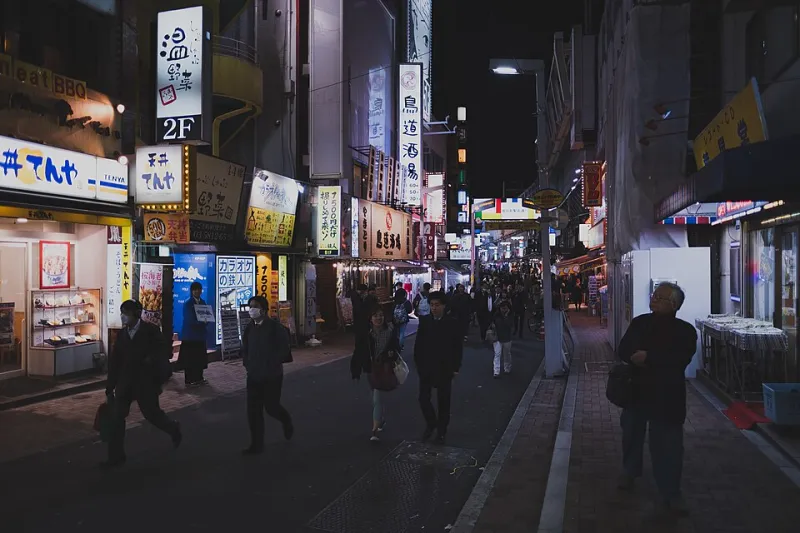
The anime-specific rooms are smaller and pass by word of mouth. Look for once-a-month nights rather than full-time bars: a DJ with an actual pressing of a Ninomiya score, or a Koenji backroom where someone runs a four-hour set of nothing but 1980s anison B-sides. Shimokitazawa and Nakameguro have the highest concentration, and a lot of it surfaces only on Japanese-language Instagram accounts days before the event.
Distinguish, too, between an anison bar and a listening bar. The karaoke-adjacent anison bars around Akihabara are loud, communal, and built for singing along. A listening bar is the opposite: the music is treated as a recording rather than as nostalgia fuel, and the crowd is there to hear the mix.
Why this feels so different from mainstream otaku nightlife
At a karaoke box, the song is a prompt for you. At a listening bar, you're a guest of the record. That inversion changes the whole social texture. Nobody is performing fandom. Nobody is asking what you've watched. The shared thing is the sound, and it's enough.
It's also a much better deal for introverts. You can sit alone for two hours, drink one whiskey, hear something you've loved since middle school on a system that costs more than a car, and leave without speaking to a soul. Try that in a crowded theme cafe.
Building the room at home
US fans have been quietly doing versions of this for years — a record store after-hours listening session, a bar with a good turntable and a slow Tuesday, somebody's living room with a strict 'phones down' rule. The formula travels better than the aesthetic does.
A few practical notes if you want to try it:
- Start at fifteen people, not fifty. A listening event dies the moment the room is too loud for the quietest passage.
- Write the rule down and put it at the door. 'No talking during sides' works if it's stated up front, and people genuinely respect it.
- Mind the licensing. Public performance of recorded music in a bar means PRO obligations — ASCAP, BMI, SESAC. House parties are one thing; a ticketed event in a venue is another. Talk to the bar owner before you bring a crate of records.
- Curate, don't shuffle. The entire appeal is a human choosing. A themed set — one composer, one decade, one console — beats a playlist every time.
- Keep it small and keep it recurring. Monthly beats a one-off, because the third or fourth night is when strangers start recognizing each other.
That's the whole trick, really. Not the speakers. The room learns to be quiet together, and then the music gets to be the loudest thing in it.